
PRODUCTION AI FOR B2B SAAS
The hard AI questions begin after the demo works.
Machine Minds writes about adding AI to existing SaaS products: authorization, context, tenant isolation, product actions, evaluation, latency, cost, observability, human approval and failure recovery.
The goal is not generic AI commentary. It is practical product and architecture thinking for CTOs, CPOs and engineering teams trying to turn a roadmap item, pilot or prototype into a capability customers can rely on.
WHAT WE WRITE ABOUT
Problems that appear when AI meets a real product.
Authorization, product context, tenant boundaries, APIs, async jobs, model routing, rollback and operating cost.
When chat is the wrong UX, actions versus answers, human approval, failure states, adoption and measurable product behavior.
Evaluation, monitoring, reliability, security, observability, ownership and the work required to move beyond a successful prototype.
Public product workflows examined for useful AI opportunities, architecture tradeoffs and reasons a generic chatbot may not be enough.
EXPLORE THE PRODUCTION AI TOPICS
Follow the problem from product decision to production operation.
The strongest content clusters stay close to the questions SaaS leaders and engineering teams face when AI moves from a roadmap concept into a real customer workflow.
AI Product Engineering
Product context, permissions, tool use, APIs, evaluation and the system around the model.
Explore the capability →02Pilot to production
Retrieval quality, failure modes, latency, cost, security and the blockers that appear after a demo works.
Explore Production Rescue →03AI SaaS modernization
Adding intelligence to established architecture without turning every product change into a platform rewrite.
Explore modernization →04Forward-deployed AI engineering
Keeping senior engineering close to users, workflows and code when the production problem is still being discovered.
Explore forward-deployed AI →
From Prototype to Vertical Slice: The Right Way to Start AI Development
Move an AI prototype to production using 6 essential vertical slice checks for identity, data, APIs, permissions, UI and evaluation in B2B SaaS.

From Prototype to Vertical Slice: The Right Way to Start AI Development
Move an AI prototype to production using 6 essential vertical slice checks for identity, data, APIs, permissions, UI and evaluation in B2B SaaS.

How to Evaluate an AI Feature Before Customers See It
Use AI feature evaluation to check 6 critical areas: representative cases, factual quality, permissions, tools, failure handling and release readiness.
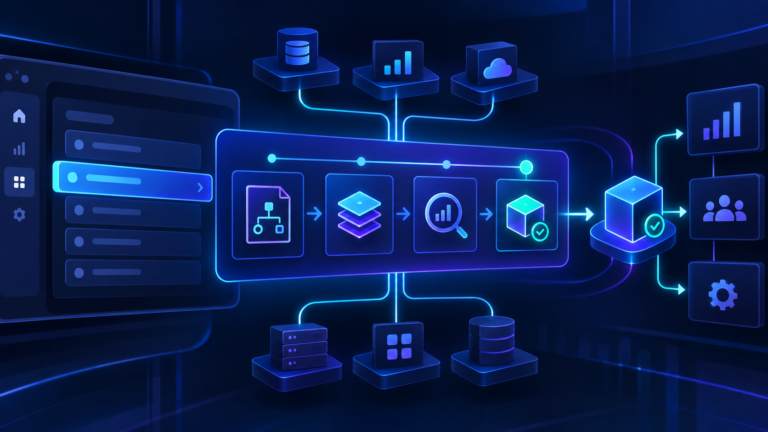
A Practical AI Feature Sprint for B2B SaaS Teams
Plan an AI Feature Sprint with 6 essential steps from workflow selection and architecture to integration, evaluation, hardening and controlled release.

How to Define Acceptance Criteria for an AI Feature
Define AI acceptance criteria through 7 essential checks for workflow fit, factual quality, permissions, latency, cost, failure handling and ownership.
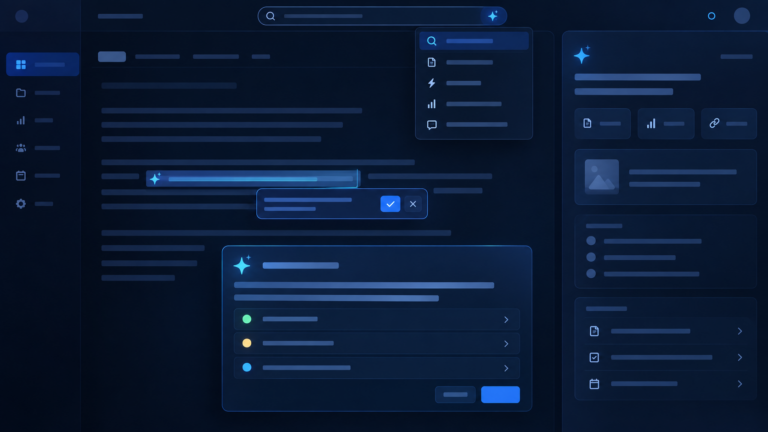
Why Chat Is Not Always the Right Interface for an AI Feature
Improve AI UX with 6 essential SaaS interface patterns, including inline suggestions, review cards, smart search, contextual panels and bounded actions.
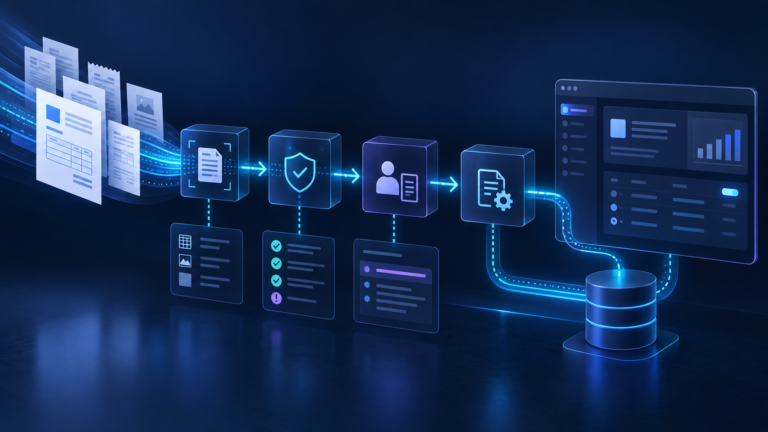
Building Intelligent Document Workflows Into SaaS Products
Build an AI document workflow with 6 essential checks for ingestion, extraction, validation, permissions, human review and traceable product updates.

How to Design AI Features That Can Safely Take Product Actions
Design AI tool calling with 7 critical controls for identity, narrow tools, authorization, validation, confirmation, audit and recovery in SaaS.
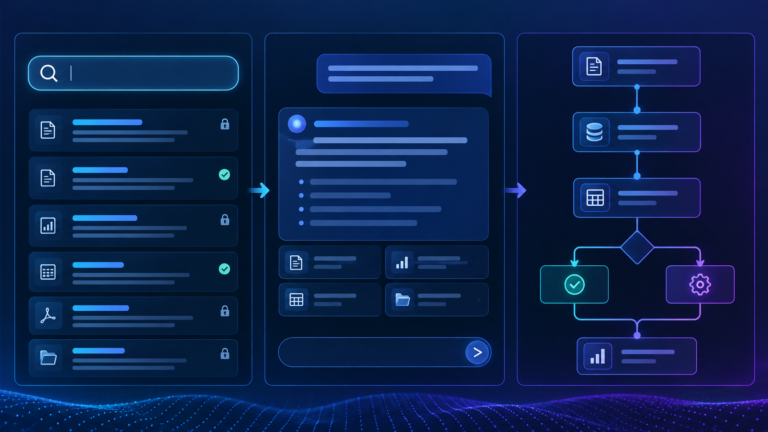
AI Search vs AI Copilot vs AI Agent: Which Feature Should You Build?
Compare AI search vs AI copilot vs AI agent across 3 essential choices for SaaS teams: finding information, assisting decisions and taking bounded…
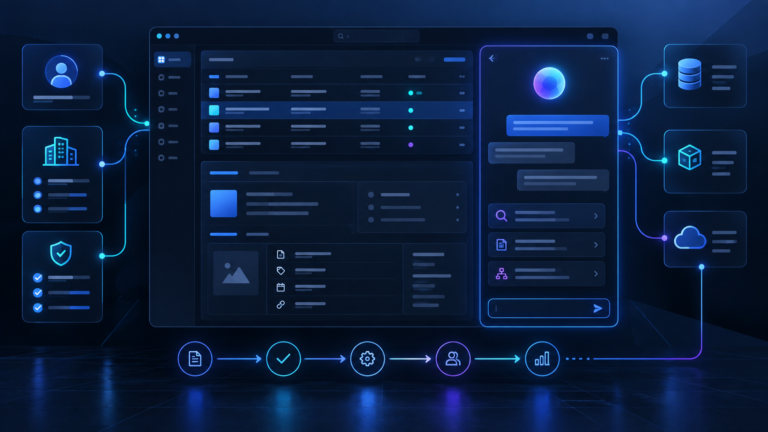
Building an AI Copilot That Actually Understands Your Product
Build a SaaS AI copilot using 6 essential context checks covering users, tenants, permissions, records, APIs and workflow state inside your product.